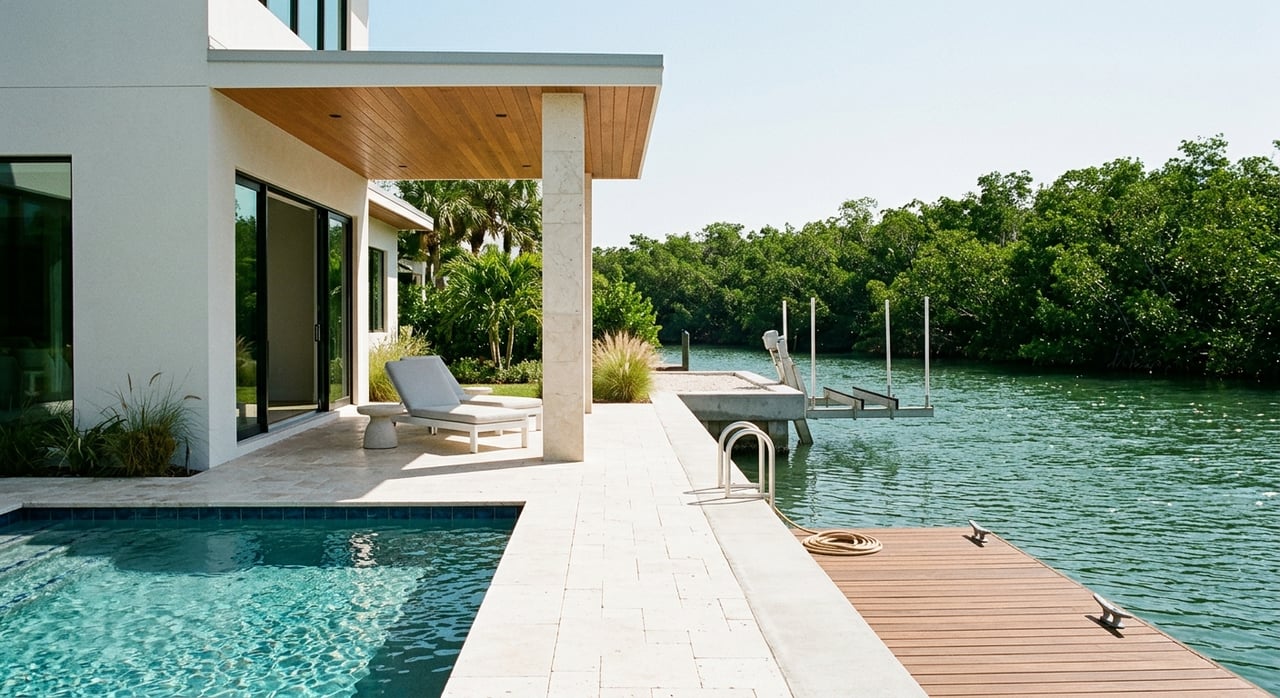
Choosing Nokomis Waterfront Property Types Wisely
April 2, 2026
April 2, 2026
Trying to choose between canal, bay, or Gulf access in Nokomis? That decision can shape everything from how easily you get your boat out to how much shoreline upkeep and insurance planning you may face. If you are weighing waterfront options in Nokomis, this guide will help you compare the tradeoffs clearly so you can focus on the right property for your lifestyle and goals. Let’s dive in.
Nokomis offers more than one kind of waterfront living, and that is what makes the area so appealing. You will find inland canals, bayfront settings tied into Roberts Bay, Dona Bay, and Lyons Bay, plus Gulf-front opportunities on Casey Key.
According to Visit Sarasota County’s overview of Casey Key, Osprey, and Nokomis, Nokomis Beach includes a boat ramp and bayside dock, while North Jetty Beach gives you a close look at boat traffic moving between the Intracoastal Waterway and the Gulf. NOAA also notes that Nokomis, Laurel, and nearby Venice sit within a connected waterfront system around Roberts Bay, Dona Bay, Lyons Bay, and Venice Inlet.
That means your choice is not simply about being “on the water.” It is about what kind of water access you want, what kind of boat you have, and how much exposure or complexity you are comfortable with.
Canal properties usually appeal to buyers who want protected dockage and a calmer day-to-day boating setup. If you picture keeping your boat close to home in a more sheltered setting, a canal home may feel like the most practical fit.
The tradeoff is that canal access often comes with the most restrictions. NOAA reports that channels in Roberts, Dona, and Lyons Bays have reported drafts of about 2 to 5 feet to landings, which can limit larger vessels or boats that need deeper water to move comfortably through the system.
Canal homes often make sense if you value:
For many buyers, this setup offers convenience and peace of mind. Protected water can also feel easier to manage than more exposed shoreline.
With canal access, the details matter. You will want to confirm:
This is especially important in the Nokomis-Venice corridor, where bridge height can quickly become the limiting factor.
Bayfront properties often strike a middle ground between canal shelter and broader boating access. If you want calmer water but also want a more direct route toward the Intracoastal Waterway and Gulf, bay access may offer the balance you are after.
NOAA’s local route data supports that general comparison. Bay properties typically improve movement compared with fully canalized settings, though you still need to confirm depth and bridge limits on the specific route from the property.
Bayfront living can be a strong fit if you want:
Bay access can feel like the most versatile option. It often offers a strong mix of boating function, views, and day-to-day livability.
Even if a home sits on the bay, that does not mean every boat can move freely without issue. NOAA notes that the local waterways and inlet conditions are not static, and shoaling has been reported in the area. The agency also advises local knowledge because the inlet channel and nearby bay channels can change over time.
In other words, bayfront is often easier than canal access, but it is not a substitute for due diligence.
Gulf-front homes in the Nokomis area are closely tied to Casey Key, the barrier island just offshore. These properties are often the most visually dramatic, with direct beach frontage, wide water views, and fewer inland bridge concerns for beachside location.
For buyers focused on scenery and direct coastal living, Gulf-front can be the dream setup. But it comes with a different set of responsibilities than canal or bay properties.
Gulf-front homes are often best for buyers who prioritize:
These homes sit in one of the most distinctive waterfront environments on the Suncoast. They also tend to occupy the premium end of the market, especially on Casey Key.
Exposure is the key issue. Gulf-front settings on a barrier island face more wave energy than sheltered bay or canal locations.
The National Park Service explains that barrier islands act as buffers that absorb coastal forces, and the Florida coast’s beaches and dunes play an important role in reducing wave damage. The City of Venice also describes the South Jetty as a federally engineered wave-control structure that helps stabilize the ICW entrance, while noting that major storms can increase erosion.
That means Gulf-front ownership can bring more shoreline exposure, more resilience planning, and potentially more permitting complexity than a more sheltered parcel inland.
For many waterfront buyers in Nokomis, bridge clearance ends up being the deciding factor. A beautiful home loses some appeal if your boat cannot comfortably make the trip to open water.
NOAA’s bridge table for the corridor shows just how wide the range can be. Bridge clearances in the area include:
These clearances are measured at mean high water. If you own a taller center console, a boat with a tower, a flying bridge, or a sailboat, the difference between a 9-foot bridge and a 30-foot bridge is significant.
Before you focus on finishes, views, or even dock length, ask these questions:
That checklist can narrow your search fast and help you avoid falling in love with the wrong property.
Waterfront homes do not all carry the same ownership profile. Canal, bay, and Gulf-front properties may look similar in a search result, but the maintenance and insurance picture can be very different.
FEMA explains that lenders must require flood insurance for buildings in Special Flood Hazard Areas when the mortgage is federally backed. Florida’s insurance framework also separates flood risk from wind coverage, which means a standard homeowners policy does not automatically cover flood losses.
Sarasota County participates in the National Flood Insurance Program’s Community Rating System, and the City of Sarasota notes that flood insurance is available in Sarasota County through NFIP, with potential CRS discounts in some cases. That is useful context, but each property still needs its own flood-zone and insurance review.
If you are looking on the Gulf side, permitting can become part of the conversation too. Sarasota County’s coastal construction control line runs along the Gulf side of the county, and construction or alteration seaward of that line requires a DEP permit.
That does not mean Gulf-front is the wrong choice. It simply means you should evaluate the property with a clear understanding of shoreline exposure, improvement plans, and long-term maintenance expectations.
Waterfront pricing in Nokomis can vary widely depending on whether you are looking at a canal home, bayfront parcel, or Casey Key property. Broad market numbers help frame the landscape, but they do not replace true waterfront comparisons.
According to the February 2026 Sarasota County single-family market summary, the countywide median sale price was $475,000, with 5.0 months of inventory and a 59-day median time to sale. The Venice Area Board of REALTORS reported a January 2026 median sale price of $470,000 for single-family homes, while Redfin’s Nokomis market page showed a February 2026 median sale price of $520,000.
For waterfront specifically, the range stretches quickly. Redfin’s broader waterfront pages showed a median listing price of $475,000 in Nokomis and $425,000 in Venice, but Casey Key examples move much higher, including listings such as 409 Casey Key Road at $3.475 million and other barrier-island homes in the multi-million-dollar range.
Luxury waterfront is its own segment. The Venice Area Board of REALTORS notes that median sale price does not fully capture higher-end homes, which is why serious waterfront buyers should rely on recent comparable sales, listing velocity, and property-specific features more than countywide medians alone.
If you want the simplest version, think of the three options this way:
| Access Type | Best For | Main Watchouts |
|---|---|---|
| Canal | Sheltered dockage and protected water | Low depth, turning room, bridge limits |
| Bay | Balance of calmer water and easier movement toward the ICW and Gulf | Route depth, bridge checks, shoaling |
| Gulf-front | Beach access, views, and a barrier-island setting | Wave exposure, erosion, permits, insurance complexity |
For most buyers in Nokomis, the best choice is less about the label and more about the exact parcel. A mainland canal, mainland bayfront site, Casey Key bayside property, and Casey Key Gulf-front home can all offer very different ownership experiences.
When you compare waterfront homes, review them in this order:
That order can save you time and keep your search grounded in the realities of the property, not just the photos.
If you are sorting through Nokomis waterfront options and want a clear, practical read on how a specific property fits your boating and ownership goals, Evan Weber can help you compare the details that matter most and move forward with confidence.
Evan is utilizing his skills, knowledge and expertise in residential real estate to help others find their dream home on the Suncoast. Get assistance in determining current property value, crafting a competitive offer, writing and negotiating a contract, and much more. Contact him today.